The Cloak of Invisibility: What We Don’t See When We See Homelessness
The Cloak of Invisibility
What We Don’t See When We See Homelessness
By Deidre Lopez

Most people don’t look at the homeless.
Not really.
They look past them, the way you glance past a stain on the sidewalk or a billboard you’ve stopped noticing. They pull their children closer, adjust their purse straps, avoid eye contact, and whisper things like, “They need to get a job,” or “See? That’s why you do your homework.” A living, breathing human being becomes a cautionary tale in a single glance.
What we forget, what we were never taught to remember, is that every person we avoid once had a beginning infused with possibility.
Someone once waited for them to take their first breath.
Someone once swaddled them, whispered to them, or prayed for them.
Or worse maybe no one did, and that silence is why they are where they are.
Every homeless person is someone’s child.
And someone’s heartbreak.
I know this not from observation, but from experience.
Becoming Invisible

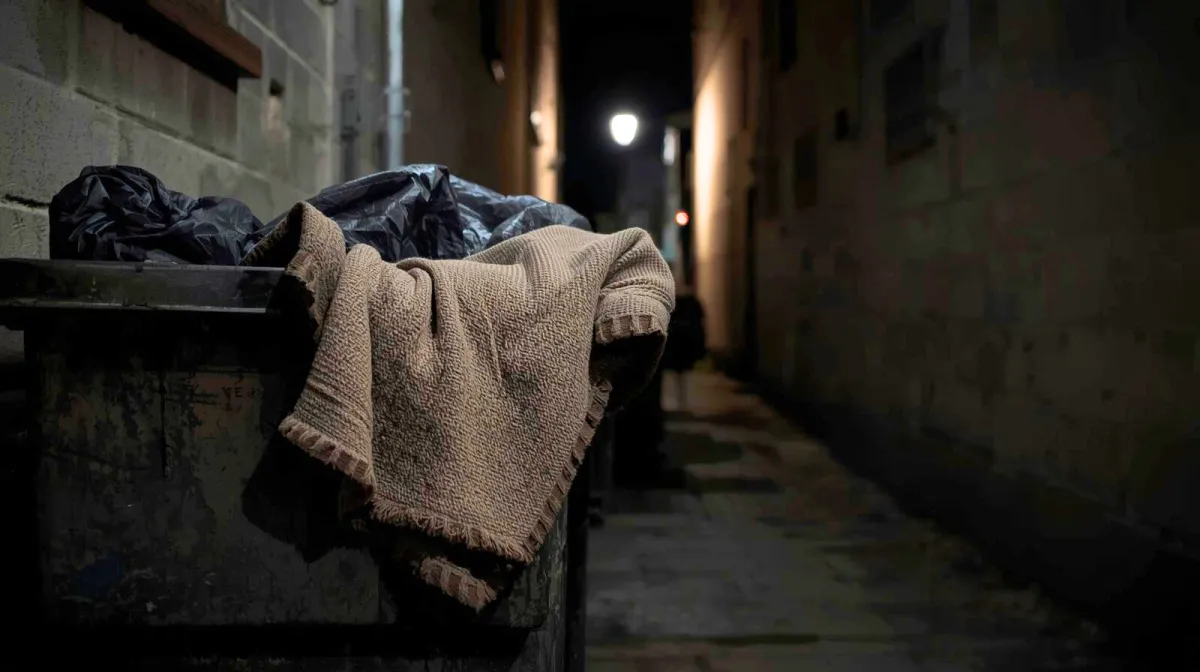
In my mid-twenties, an age when you’re supposed to be discovering who you are, building a life, finding your footing… I was homeless. Not metaphorically. Not “between places.” I was living under an abandoned couch in an alleyway, learning how to survive a world I no longer felt invited into.
People imagine homelessness as this dramatic, sudden drop but often it’s a quiet slide, one mistake or heartbreak or tragedy away from where they stand. For me, it was fear.
Fear that if I admitted I needed help, my family would take my daughter from me forever.
Fear that asking for a lifeline would be used as evidence that I didn’t deserve to hold onto the one thing I loved most.
So I chose the streets over the shame of asking.
Loneliness over judgment.
Disappearance over being seen as unfit.
Loneliness became my only friend, and even that friendship felt conditional like it could slip away if I wasn’t careful.
The cold of that winter wasn’t nearly as chilling as the hollowness inside my chest.
My tears made the sea I was drowning in, and somewhere along the way…
I forgot how to swim.
The Daily Reality No One Sees
People think homelessness is one thing.
It isn’t.
It’s walking miles because you don’t have a car, but also because sitting still is dangerous.
It’s drinking just enough to forget how cold your bones feel.
It’s hoping the oranges hanging over someone’s backyard fence are ripe, because that might be your only food for the day.
It’s counting change for a Light Rail ticket but staying hyper-alert because a security officer could ruin your whole week.
It’s the mental checklist of a survivor:
Where can I sleep without being chased away?
Where’s the next bathroom I can wash up in?
Can I make myself small enough not to be noticed tonight?
I found safety in the strangest places, like the bathroom at El Pollo Loco, because the door locked and I could take a bird bath without someone barging in. That bathroom felt more like a home than anywhere else for a while.
And yet, in all of this, the worst part wasn’t the hunger, or the cold, or the hours of walking.
It was the invisibility.
The way people refused to look at me.
The way mothers tightened their grip on their child’s hand when I passed.
The way some people’s eyes slid over me like I was a wrinkle in the air instead of a person.
And I get it I really do.
Homelessness scares people because it holds up a mirror to how fragile stability actually is.
But fear is not an excuse for erasing someone’s humanity.
The New Kind of Invisibility

There’s a new cultural script around homelessness now, one that looks responsible on the surface, but underneath… creates a deeper kind of invisibility.
Cities put up signs telling us not to give money directly to the homeless.
“Donate to services instead,” they say.
“Don’t enable addiction.”
“Don’t encourage them to stay here.”
And on paper, sure services matter.
Addiction is real.
Support systems are necessary.
But those signs also do something subtle and devastating:
They give people permission not to look homeless individuals in the eyes anymore.
They give people permission to treat a whole population like an inconvenience that should be handled behind a desk somewhere not a person standing right in front of them.
It becomes easier, almost justified, to walk by.
To ignore.
To decide, “The city will take care of them.”
And with every “official notice,” every “do not give,” every “call this hotline instead,”
society learns to outsource compassion.
We forget that sometimes the most life-changing thing isn’t a program…
it’s a moment of human recognition.
We forget that a warm meal in someone’s hands, not passed anonymously through an organization but from one human to another, can remind someone they are still worthy of warmth.
We forget that a hand on a shoulder gentle, not pitying can linger in a person’s memory longer than a pamphlet ever will.
Because when you’re homeless, you don’t just lose shelter.
You lose touch.
You lose voice.
You lose eye contact.
You lose the simple affirmation that comes from someone seeing you and not looking away.
I remember feeling less than a dog sometimes because at least people feel sorry for dogs.
At least they soften for them, bend down to help, offer water, murmur, “Oh honey, are you okay?”
But for a human being sitting on the sidewalk?
People stiffen.
Pull their children closer.
Act like you are a contaminant, not a life.
“This doesn’t belong in my neighborhood.”
That’s the message. spoken or unspoken, that so many of us have heard.
The Moment Everything Shifted
But then… there was the turning point.
I still remember the exact day.
I walked up to a small group of people not because I had courage, but because I was desperate.
My throat was dry, my body shaking, and all I could manage to say was,
“Do you have any water?”
I expected the usual: a stiff shoulder, a forced smile, a whispered excuse.
But instead… they turned toward me.
Fully.
Softly.
Like I was a person.
It turned out they were part of a church group.
They didn’t just hand me water; they handed me compassion.
They looked me in the eyes.
They asked if I was okay.
They didn’t rush.
They didn’t judge.
They didn’t try to “fix” me.

In that moment, I went from feeling like a plastic bag drifting across a parking lot…
to feeling like a human being again.
Just from water.
Just from eye contact.
Just from being acknowledged.
The life that had been draining out of me began to drip back in, one small drop at a time.
Learning to See Each Other Again
I’m not writing this to make anyone feel guilty.
Guilt doesn’t feed anyone.
Guilt doesn’t change anything.
Guilt just freezes people in place.
I’m writing this so that maybe, the next time you pass someone on the street wrapped in a blanket, or talking to themselves, or clutching a backpack that holds their entire life, you slow down for a breath.
Maybe you don’t look away.
Maybe you offer a smile.
Maybe you see the human beneath the cloak society has forced onto them.
Because there was a time, if even for a moment, when someone held that person in their arms.
Maybe they were loved fiercely.
Maybe they were loved inconsistently.
Maybe they were never loved at all.
But they were born deserving of love.
Just like you.
Just like me.
And even if life carved them down to the bone, their humanity is still intact waiting for someone to see it.
Coming Full Circle
I survived homelessness.
I rebuilt.
I healed.
But even now, all these years later, there are moments when I pass someone on the street and feel my body remember things my mind wants to forget; the cold concrete, the sound of footsteps approaching, the taste of stolen oranges, the click of a bathroom lock at El Pollo Loco, the weight of being unseen.
And I look at them, not past them, because I know how much it hurts to disappear while still being alive.
Homelessness is not about bad people.
It’s about forgotten people.
Invisible people.
Unheard people.
And maybe if more of us were willing to look, truly look, we might remember the simplest truth:
None of us are above anyone.
And all of us are one moment away from needing the kind of compassion we hesitate to give.


